
The 2021 United Nations Climate Change Conference, also known as COP26, is the 26th United Nations Climate Change conference. This year it is scheduled to be held in the city of Glasgow, Scotland, between 31 October and 12 November 2021.
Rowan is marine scientist, ocean advocate and public speaker; she is passionate about promoting ocean health and our connection with the natural world.
Q What is your professional background in the arts?
My background is marine science; I studied in Plymouth for both my masters and undergraduate. I now work as a Marine Ecosystem Officer in the Department of Environment, Food and Agriculture in the Isle of Man Government. I helped to develop the Isle of Man’s first climate action plan and am now working on regulations to ban unnecessary single use plastics, and developing an exciting new blue carbon project.
In my own time I love to work on creative environmental projects, I record a podcast with my good friend Aaron Ibanez called ‘Making Waves’, which is available on Manx Radio. Last year I co-delivered a new course at University College Isle of Man called “The Planetary Emergency and Us”. I also love adventure, and a couple of years ago I had the opportunity to sail across the Great Pacific Garbage Patch, to study the impact of plastic pollution on our oceans.
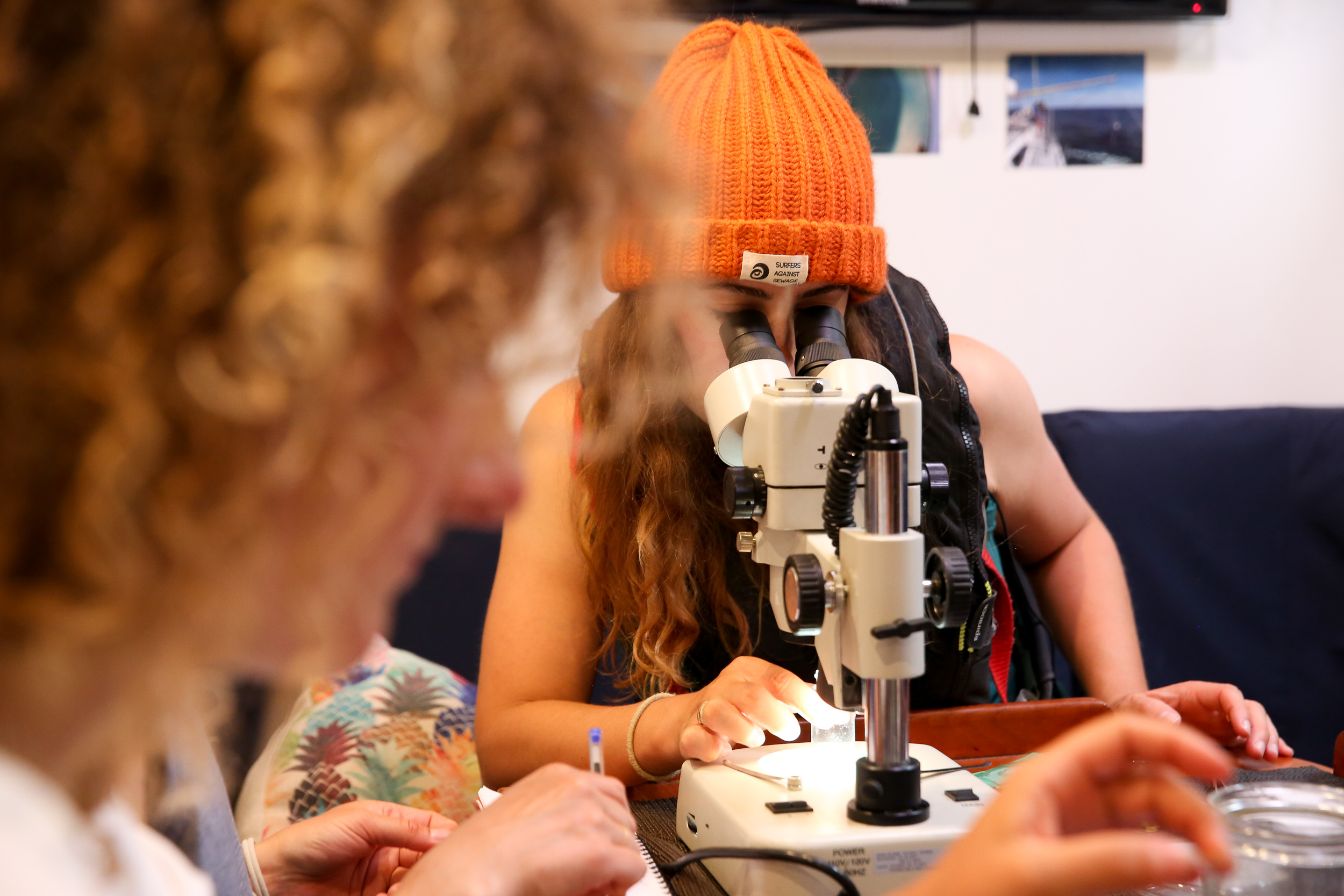
Q When did you first become aware of the climate change crisis? Was there a specific event or person who highlighted this?
I guess I first became aware of climate change when I did my undergraduate degree, but the scale and urgency of the issue didn’t really hit home until I started working in the climate change team at DEFA. We had some initial training, and I remember the guy showed a couple of videos that Sky had produced about what would happen if the world heated up by 2 degrees, then 5 degrees, and I don’t know why…maybe the fact they were so visual, but they really shocked me and woke me up to the reality of the crisis we face.
Q Tell us what the relationship between art and environmentalism means to you?
The connection between art, science and the environment has always been really important to me. Art and science particularly share a lot of common ground, both require exploration, creativity, the need to think outside the box and ask questions! Art has this incredible ability to tell stories that cross cultural and societal barriers, so I think it’s more important than ever to bridge the gap between them, to both tell the stories of the environmental challenges we face, and help to paint a picture of the future we want to create.
Q What is the role of art in climate change mitigation?
Art influences and inspires, and there is a huge need for both in climate change mitigation and adaptation. We need a huge cultural shift to address the most pressing climate and environmental challenges, and think art plays a really key role in that.

Q What is the greatest challenge facing the planet right now in your opinion?
The greatest challenge facing the planet right now is us, and for me our greatest challenge is twofold. I think we are facing an imagination crisis, so much of the climate and environmental crisis is wrapped up in fear, and understandably so, the consequences of not acting are scary, but I think that fear is stopping us from imagining a better future. I mean look at the last 30, 40, 50 years, change is guaranteed, but it’s up to us to imagine what that looks like. Films that depict the future are always so dark and apocalyptic, certainly not a place I would like to live, we have to imagine the future we want to create, and that’s exciting because it opens up a world of wonderful possibilities.
With that in mind we also have to fundamentally change the way we see ourselves in this world, our role on this planet and our connection to it. We are part of nature, not here to extract as much as we can, we’re intrinsically linked to every other living thing on this planet, we are part of this incredible system and we need all decisions going forward to be underpinned with that understanding.
Q What progress have you seen – share a positive news story in regards to climate change action.
I think it’s really interesting, and important, to look back in history at the progress society had made. Take the ozone layer for example, in the mid-80s scientists found a gaping hole in it due to the use of man-made CFC chemicals. Countries all over the world worked together to ban the production and use of the chemical, through the Montreal Protocol, and now the ozone layer is repairing itself, and is expected to be completely healed in the not too distant future.
Or the International Moratorium on Whaling, which along with Greenpeace’s ‘Save the Whale’ campaign, brought so many whale species back from the brink of extinction and made us think about these incredible sentient beings in a totally different way.
In terms of positive climate change stories happing now, the Earthshot Prize is a new global environment prize which has been designed to incentivise change and help repair our planet over the next ten years. Some of the entries are incredible, such as Coral Vita, a company growing a repairing coral reefs 50 times faster than traditional methods.
Q Who are your favourite Artist(s) who tackle themes of Climate Change?
One of the most moving things I’ve seen recently is a collaboration between Ludovico Einaudi and Greenpeace, called ‘Elegy for the Arctic’, it’s so haunting. PangeaSeed Foundation also work with some incredible artists on a project called ‘Sea Walls: Artists for Oceans’ which brings the issues of ocean conservation to cities all over the world through the most beautiful murals.
Q What message would you like to leave readers with in the wake of COP26?
This quote by Margaret Mead always resonates with me:
‘Never doubt that a small group of thoughtful, committed citizens can change the world; indeed, it's the only thing that ever has.’
Q What is next for you?
I’m really excited to work on this new blue carbon project, protecting and restoring our marine environment gives me hope for the future. Working with nature is so good for the mind and it reminds me that if we step back, and create space for nature do its thing, there is a chance to create better world.
