
How does creative activity help to relieve your feelings of stress?
The month of April is National Stress Awareness month. One year into the pandemic with multiple lockdowns, it is no suprise that everyone is feeling stress in at least one aspect of their lives. Whether it’s additional work responsibilities, no work, ill health, mental health, or anything in between there’s a lot going on that can be a trigger for stress.
Engaging with creative activities or a regular art practice has been shown to have a positive effect on our mental wellbeing.
Creativity reduces anxiety, depression, and stress… And it can also help you process trauma. Studies have found that writing helps people manage their negative emotions in a productive way, and painting or drawing helps people express trauma or experiences that they find too difficult to put in to words.
Forbes
For Stress Awareness Month we asked you about how creativity helps you to unwind and lessen the feeling of overwhelm. Perhaps you like to colour and draw, have a daily journaling practice, loosen things up with a dance or lose yourself in musical practice? Below Vici Blackburn, Nicola Dixon, John Hall and Ellie Quayle told us how creativity helps with their mental wellbeing.
Vici Blackburn
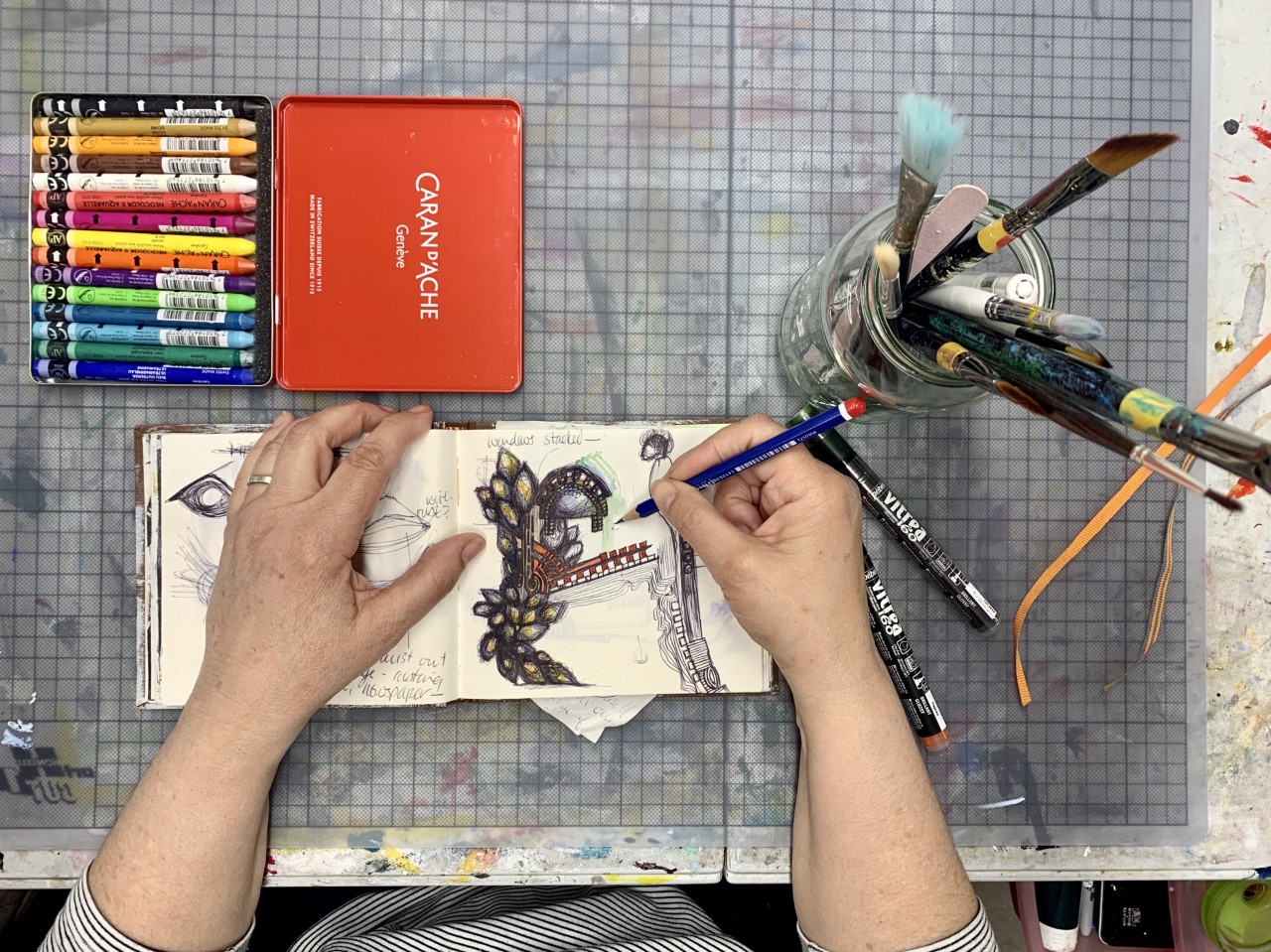
"I doodle. It’s breathing with your fingers, everyone can do it, everyone does do it. Why is it so good? It’s repetitious, anything repetitive is eventually calming, & there are no expectations, it’s not meant to be anything. Our brains tell us to be anxious which is useful in order to avoid danger or to get things done, but when your brain is a bully and puts something on a loop playing it over and over it’s so hard to stop it. So, I start doodling. I don’t try and stop my brain going on and on and on, I just keep doodling. Now my brain hates not being centre stage so after a while it always goes, is that a flower? My hands never answer, they just keep breathing, so my brain goes , it looks like a flower, and my hands don’t answer they just keep breathing, doodling away, and my brain goes can you do a tree, and my hands keep breathing and my brain goes what about colour?
Now do you see, my bully brain has stopped focusing on the end of the world , my adrenalin and cortisol are receding, my hands are in charge. A tree it is.
I do treat myself to pretty little notebooks just for doodling because they are a feelgood factor. But the back of an envelope will do, a cereal box, an old receipt, I warn you if there is a pen in my hand no surface is safe! "
Nicola Dixon
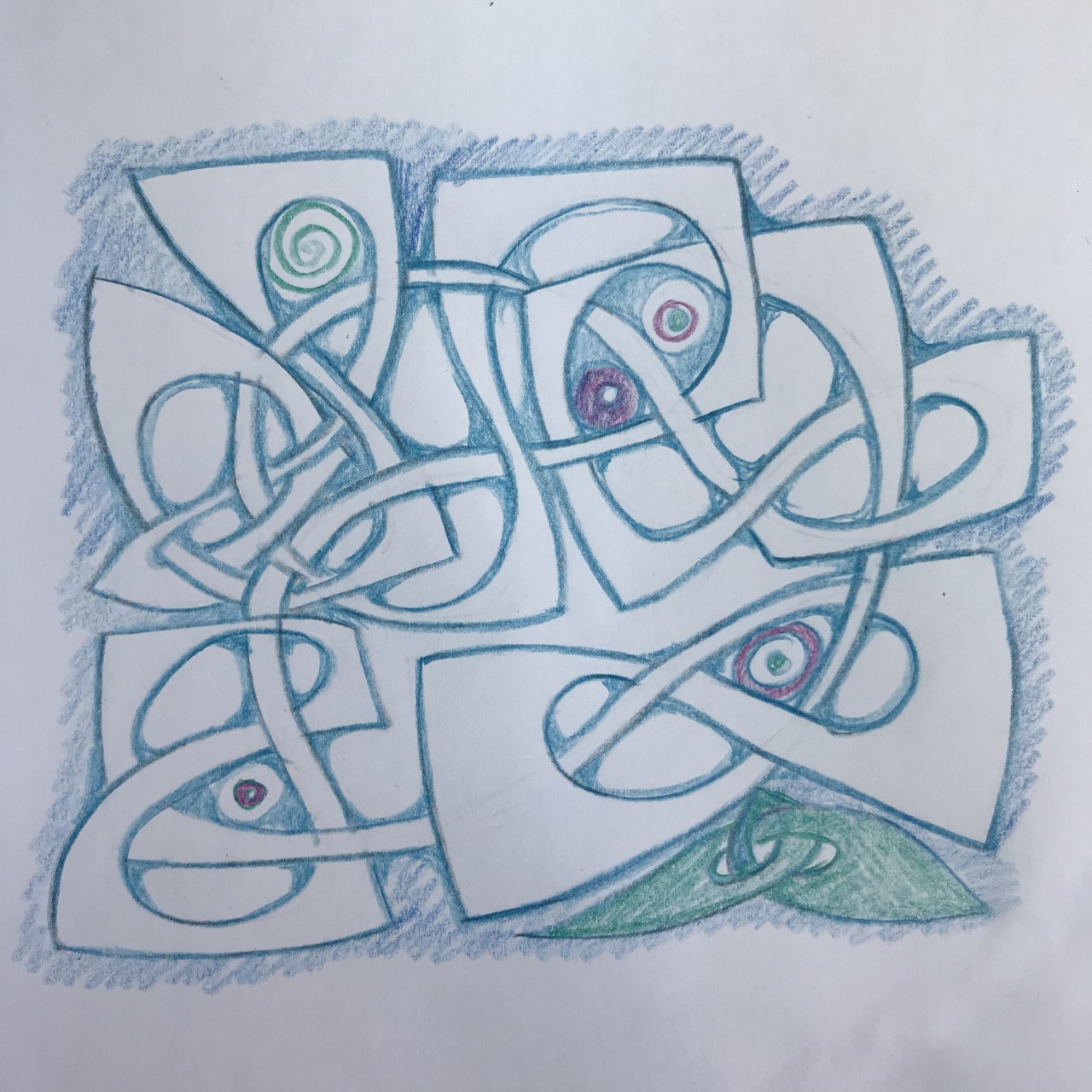
"Knox style knot drawing is a meditative practice for me. I have lost days in the process, and have done it since drawing knitting for a school project. One has to be in the moment and focus on the line, then flicks a millisecond into the future spotting it’s next move. If your attention wanders you break the rules the knot work network tangles.
The flow of the lines are pleasing and calming to draw being very natural and organic in form. Archibald Knox liked to describe line as like a blade of grass being in the wind or flying gull, which is perfect. A wise teacher once told me drawing knot work integrates the soul, and sometimes it really feels like that.
During all three lockdowns I have been doing a lot of absorbing and calming knot work by studying the Manx Cross slabs, Archibald Knox’s work, and developing my own style, learning trying new techniques and colour ways in a Knoxy knot a day project. I look forward to sharing the results of my artful meditations in the coming months."
John Hall
"I have found the art I do to be incredibly helpful in relieving stress and helping maintain good mental wellbeing. During this latest lockdown we are renting an apartment and have our grown up children working from home and I find the days just disappear and I lose track easily during the week as I get completely lost within the art project I’m undertaking."

Ellie Quayle
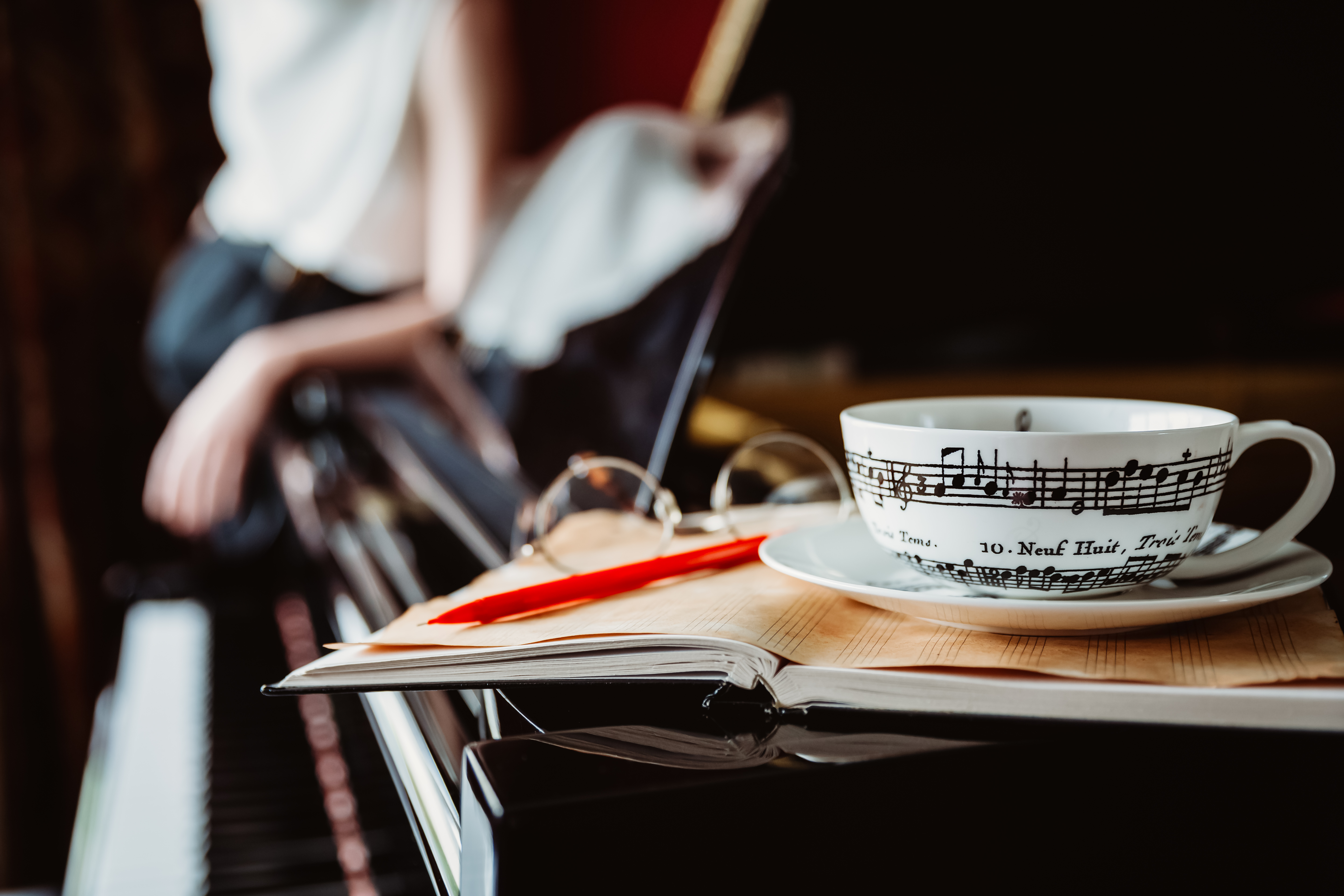
"Music is an integral part of relieving my stress and keeping well. My passion is for composition and it has guided me through so many difficult points in my life, acting as an emotional outlet and escape. Writing classical compositions as well as songs, I have found that the best way for me to express emotion is often through creating different types of work. For example, when I am feeling overwhelmed or stressed, writing a song helps me process my thoughts. Playing piano and singing is defiantly my go to when I am agitated. However, writing instrumental music is beneficial also, making me feel mindful. I write in a wide variety of styles and love to experiment with different genres. Song writing especially is such a big part of me ensuring I am mentally well balanced. I often rush to the piano when feeling down as I know creating something out of my sadness will make me feel better. Writing for me feels like medicine. It keeps me sane and happy, something I truly could not exist without."
Janet Lees
"It’s hard to put a value on how much writing supports my wellbeing, but it’s a lot! As a child I was always writing, then for a long time I didn’t, during years of addiction and related depression. Poetry came back to me in recovery and I’ve come to realise that every time I write it’s in some way therapeutic – whether it’s helping me understand something (poetry can give you these incredible lightbulb moments) or just being in the bliss-giving flow state, where everything else falls away and it’s just you and the world of the poem. I’ve always experienced a lot of anxiety, and writing enables me to leave that behind for a while."
