
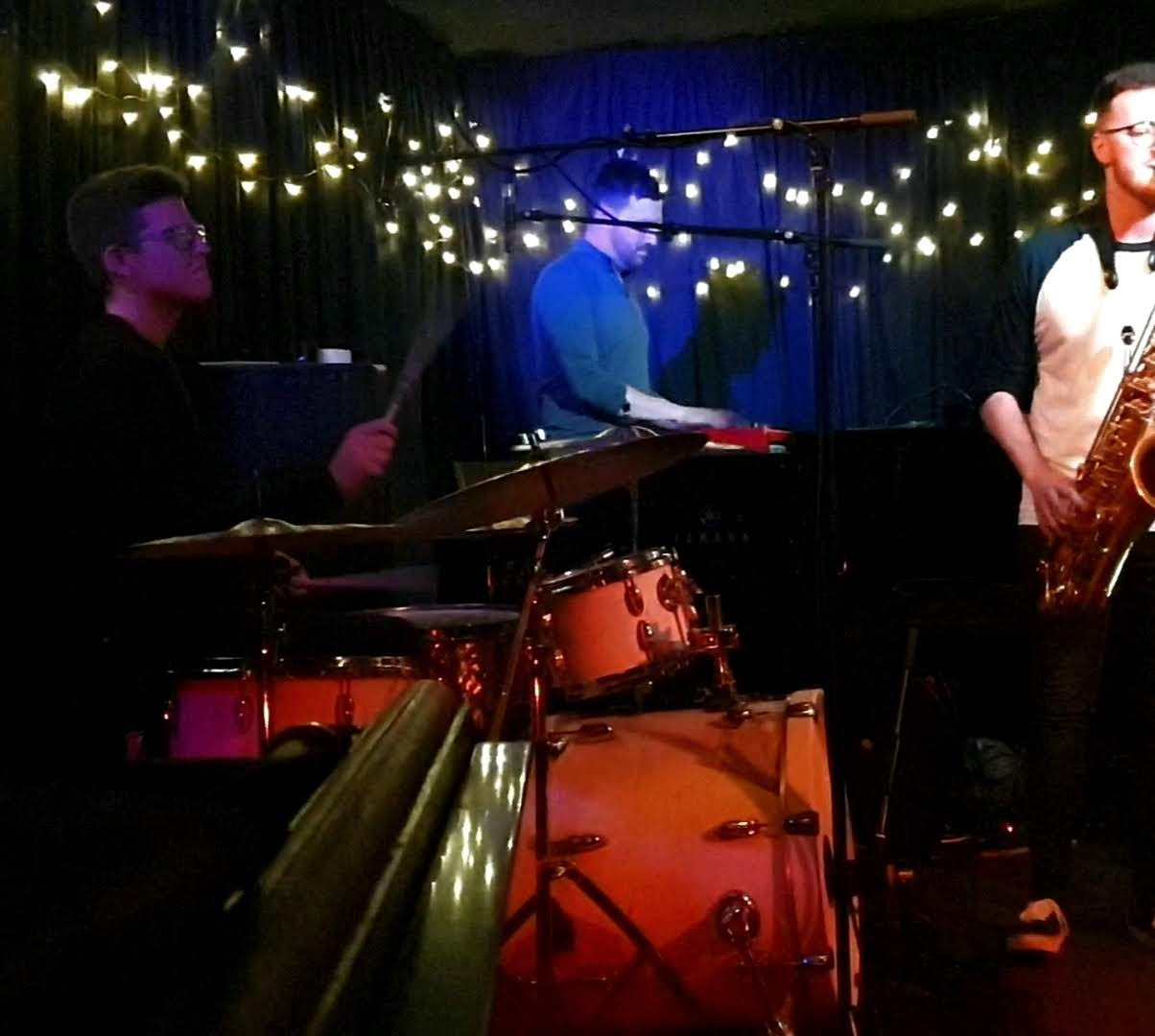
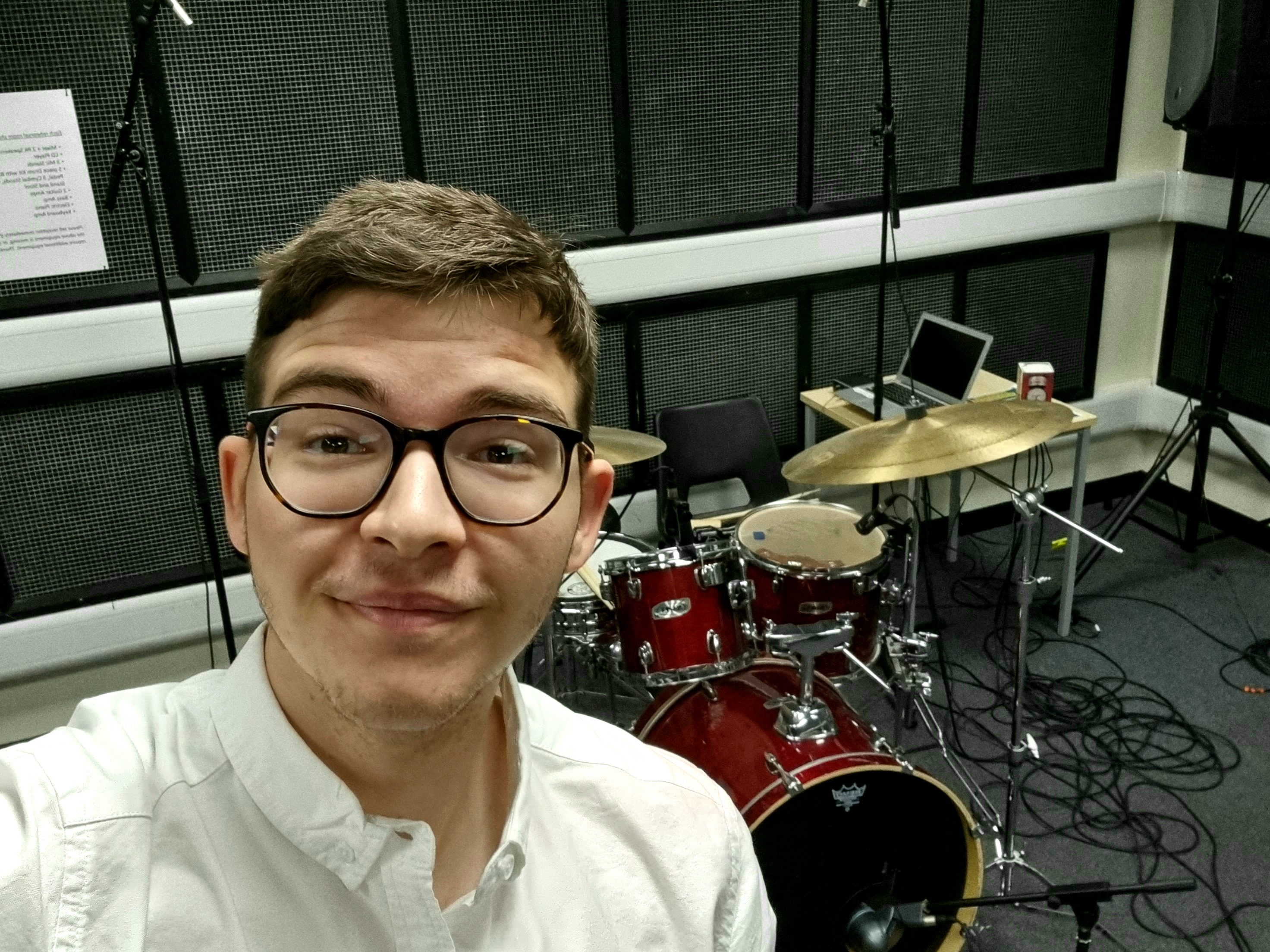
Carter Skillicorn is a professional working drummer who was born and raised in Ramsey. Carter lived here until he moved to Scotland in 2017 after finishing his GCSE's at Ramsey Grammar School. At just 20 years old, Carter has built himself up a lengthy portfolio of commissioned work and has a lot of experience performing live gigs at high profile music festivals in Edinburgh where he has recently completed his degree in music studies. Carter reached out to us to share his story with us, share some advice to aspiring musicians and to encourage island musicians to experience their industry beyond the shore lines of the Isle of Man.

I started lessons with fellow Manx drummer Pete Mitchell when I was just 8 years old before he went off to the RNCM and went on to be a working session drummer in the Manchester scene. After that, I went on to study with Nigel Johnson down in St. Johns. Nigel really elevated my passion for drumming and music and introduced me early on to the jazz world although I wasn't quite ready to appreciate it just yet.
This is because I had a passion for all things rock by the time I hit my teens and began trying to play with everyone I could, which lead me to the charity Soundcheck, where I formed a band with a few fellow RGS students. Our band were given several great opportunities to experience gigs by Soundcheck, including the Bushys TT Stage, Dark Horse Festival, and various other events including the Guild where we came in runner up in the original music category.
After accepting an offer to go and study at the Academy of Music and Sound Edinburgh, I packed up and moved up here, where I hit the ground running at just 16 and got in with a few different bands and before I knew it I was sneaking into bars and clubs underaged to provide the nightly entertainment. I was playing with as many people as I could, teaching myself genres I wasn't familiar with such as blues, funk, r&b and jazz to keep up with these older musicians I was in with. Before I knew it, I had been forced out of my teenage rock phase and into the life of a working drummer before I was even old enough to order a pint.
I continued to study, moving to a different facility, Edinburgh College for the next two years. I also continued to develop on the kit, practicing for up to 8 hours per day and playing in such festivals as the Edinburgh Fringe, Edinburgh Jazz and Blues Festival and Leith Jazz Festival to name a few as well as playing regularly in local Edinburgh institutions such as The Jazz Bar, Sneaky Petes, Stramash, Voodoo Rooms and Whistlebinkies.
Q. How would you describe your sound? Who are your biggest influences?
It's a difficult one to pin down. I've always considered myself a bit of a musical chameleon, hiding behind the rest of the band and playing what the music required. But having been locked down since the start of 2020 with no gigs, I've been able to work on developing my own sound and what I want to get out of my playing. I chose 'jazz-fusion composed by drummers' as the theme for my final degree recital this year. Drummers in that category such as Yussef Dayes and Nate Smith are my drumming idols and it was a great opportunity to delve into the nitty-gritty of their playing, conceptualise, and internalise it for my own improvisation. Developing your sound is an endless pursuit, but to answer your question I would say I'm a groove drummer, who loves syncopation and ghost notes!
It has been hard to narrow it down to a short list, but my biggest drumming influences range from the likes of older virtuosos Bernard Purdie, Steve Gadd, Zigaboo Modeliste (The Meters), Clyde Stubblefield (James Brown) and David Garibaldi (Tower of Power) to drummers currently tearing up the scene such as Nate Smith, Yussef Dayes, Anderson. Paak, Pete Ray Biggin, Petar Janjic (Cory Wong), Benny Greb, and Carter McLean to name a few. However the drummer who has been most influential on my playing over the last few years is my teacher and mentor Rich Kass.
Q. You mention how much of a role Soundcheck has been for you whilst growing up. How far did your music education on the island prepare you for university? What were the positives? What did you wish you knew before you left?
Soundcheck was such an amazing opportunity for me as a teenager who just wanted to play music with other people. Being on such a small island means it's difficult to find like-minded musicians your age to start a band and perform with. Soundcheck provided us with a weekly rehearsal space and gave us great opportunities to perform our music to people, we were even able to go and use their facilities to experience what it's like to record your music.
I think my music education on the island equipped me with a good foundation for further study of music. At school I was taught the basics of music theory, different instruments, composition and different genres and their history. It was good having a basic understanding of these concepts when starting my first year, as I wasn't having to play catch up like a lot of the other students who either hadn't taken music at school or hadn't listened in class when they did! However, the most valuable skill I learned at school was how to proficiently use Sibelius (thank you Mr. Pinnington!) as I still use it on a regular basis for transcribing material.
The only thing I struggled with at first in college up here was using a digital audio workstation (Logic, ProTools, Ableton etc..) as I'd never touched one before. It's taken me a little bit of time to get to grips with the technology side of things. So any music students heading to uni, watch some online tutorials on how to navigate through a DAW and how some of the plugins and effects work!

Q. You’ve left the island to study music in Scotland where a lot of students may perhaps commonly opt for Manchester. What has your experience of the Scottish music scene been like for you and why would you recommend it to other Manxies?
Great question! I couldn't recommend Scotland more for young music students. Personally, I've only really experienced Edinburgh (only playing occasional gigs outwith). Edinburgh is one of the most student-friendly and safest cities in the UK, with several prestigious institutions such as Edinburgh Napier University, Edinburgh College, The University of Edinburgh and The Academy of Music and Sound. The lecturers in these schools are some of the best in their field, with much wisdom, advice and mentorship to offer their students outside of the course material as well.
In terms of student life, there is so much to do, especially for music students. I got my start attending student jam nights where I met so many amazing musicians in the same boat as me. When there isn't a pandemic, there are so many diverse venues that welcome a plethora of different music and genres. Whether you're into acoustic singer-songwriter stuff, jazz or death metal, you'll be able to find a venue here that'll give you an opportunity to perform your music.
I think I adjusted to Edinburgh so well, and thrived as well as I have done here as it feels less like an intimidating city and more like a big town. As someone from such a small and safe island, upping sticks and moving to a city on the mainland can be a daunting and anxiety-inducing thought. I think Edinburgh is the next best thing for someone with that mindset, everyone here is lovely, and the student population is massive!

Q. How important is it for musicians from the Isle of Man to leave and experience their industry in a different place?
In my opinion, it's a necessity to any musician who's serious about pursuing a career in their craft. We live in the digital age now, which encourages more people to make and release music to the world from their bedrooms and collaborate remotely- and we're also forced to do that at the moment with the world still in a pandemic. However, when things are up and running I believe it's very important to experience the industry elsewhere.
Edinburgh is very much a city whose music scene focuses around live performances. It seems there's a venue on every corner, always offering interesting music. Some of my biggest lessons so far have been learned by simply watching other musicians perform- the city attracts so many incredible musicians from so many different walks of life. We also have festivals such as The Edinburgh Fringe and The Edinburgh Jazz and Blues Festival, both of which I've had the honour of performing in, which bring people from all sectors of the arts, from all around the world to the city.
Glasgow is also a short train journey away, where you can catch the biggest international artists on tour. The city also has a much more vibrant original and recorded music scene!
Q. What has been your greatest take away from your time in Scotland so far as a musician?
I think just having the opportunity to experience the life of a working musician at such a young age was a massive take away for me. There's a lot of opportunities for young people who show potential up here, as the scene isn't as saturated as say, Manchester or London for example.
It's also given me perspective on the UK music scene as a whole. I know that as I climb the ladder, one day I'll probably need to relocate to one of these populated areas if I ever become a bit more high profile, but it's been so good to get my start here.
Q. What has been the biggest challenge you’ve faced as a musician this year during a global pandemic and how have you adjusted your plans in light of this?
The biggest challenge I've faced personally was preparing my final honours recital. My original vision was for it to be a huge live culmination of my years of hard work behind the kit, but I ended up having to work remotely with my band to put it together. This changed the direction slightly, as the process of putting them together meant that the repertoire wouldn't be improvised in the room with the other musicians as intended. It was hard work preparing such material to play to backing tracks all in one take, but coming out of it, I'm really happy with the process and we definitely made the best of a bad situation.

Q. What advice do you have for island musicians looking to make it in the industry?
I've by no means 'made it' yet, but my advice would be to put yourself out there and don't stop. I know so many amazing musicians who don't have a single video of their playing online. We live in a time now where your social media is your CV. If you're being considered for a gig and have zero social media presence, chances are that the person who does will beat you to it. If you've worked on a particular cover or solo that you're really proud of, film it and put it on Instagram! You'll also meet so many people through these social media platforms!
Another word of advice would be to get out there in person (when it is safe to do so and restrictions allow). Go and watch other musicians perform and attend jam nights, you'll meet so many people at these things who will probably be in the same boat as you. The more people you know, the more opportunities will come your way!
Q. What’s next for you?
I've finished my degree this week oddly enough, so I've not had much time to consider what's next. I do have a fairly large queue of commissions to play on peoples original recorded music, so I'll make my way through all that over the summer and see where it goes! Hopefully I can get back to gigging again soon and just continue trying to make a name for myself as a session drummer.
Q. Where can we follow?
I'm on Instagram as @carter_plays_drums and YouTube as just Carter Skillicorn!
If you'd like to share your story and experience working within the creative industries, please get in touch with our Arts Engagement Officer Grainney.Sheard@gov.im
